
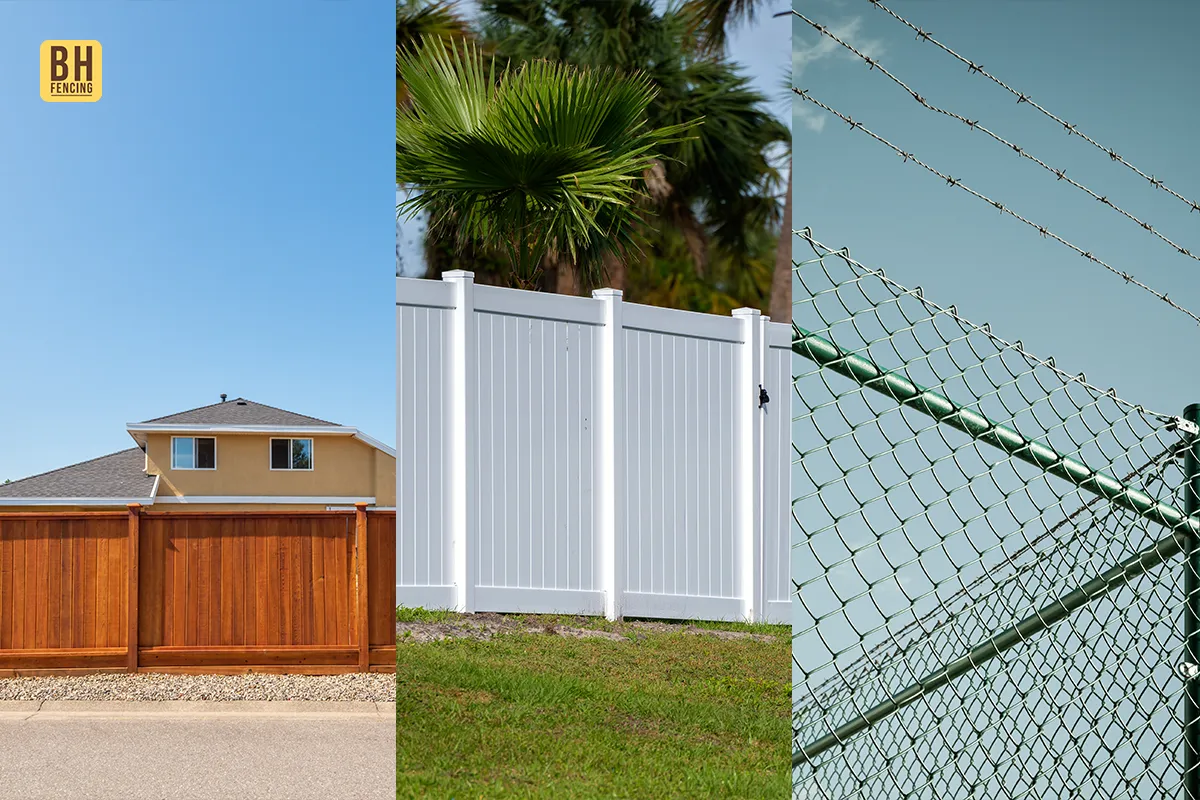
Choosing the Right Fence Material for Haldimand County Properties: Wood, Vinyl, or Chain-Link?
The aftermath of the first thaw in Haldimand County often reveals fences with posts that have heaved and misaligned, a stark reminder of the challenges posed by local conditions. Choosing a fence material in this area is not just about appearance or budget; it's also about functionality. Local soil conditions, moisture levels, property size, and long-term maintenance demands all play a role in determining which fencing option will actually perform well over time. Homeowners in Caledonia, Dunnville, Hagersville, Cayuga, and surrounding rural areas often discover that the 'best' fence material on paper does not always translate to the best real-world result.
Next, let's compare the top fence material options to see how each one stands up to the diverse conditions across Haldimand County.
Why Fence Material Choice Matters More in Haldimand County
Haldimand County properties face unique environmental and layout challenges that differ from those in dense urban subdivisions. Key factors contributing to these challenges include larger lot sizes, variable drainage patterns, and diverse soil compositions that can shift even within a single concession road. Additionally, factors like proximity to waterways and seasonal moisture fluctuations make material performance a significant long-term concern rather than just a design choice.
At BH Fencing, we regularly see fences fail early, not because of poor craftsmanship, but because the material selected was not well-suited to these complex conditions. For example, a wood fence installed near a riverside lot without proper spacing or sealing may deteriorate years sooner than expected, while vinyl installed on improperly prepared posts may shift during freeze-thaw cycles.
This is why material selection should always be tied to local conditions, not generic comparisons.
If you’re planning a fence in this region, our Haldimand County fence installation service page outlines how local factors influence both material choice and installation methods.
Wood Fencing in Haldimand County: Natural Look, Higher Maintenance
Wood fencing remains one of the most popular options in Haldimand County, especially for homeowners who value privacy and a traditional appearance. It blends naturally into rural landscapes and works well for both residential yards and larger properties.
However, wood fencing requires careful consideration in this region. Many parts of Haldimand County experience higher moisture levels due to nearby waterways, clay-heavy soils, and seasonal rainfall. Without proper installation techniques, wood can absorb moisture, leading to warping, rot, or premature failure.
From experience, we find that wood fencing performs best when:
Posts are set deeper than standard suburban installations.
Pressure-treated lumber is used.
Adequate airflow is allowed between boards.
Regular sealing or staining is planned.
Wood fencing often has a lower upfront cost than vinyl, but long-term maintenance should be factored into the decision. For homeowners willing to maintain it properly, wood remains a strong and attractive option.
Guidance from the Canada Mortgage and Housing Corporation (CMHC) emphasizes that exterior building materials should be evaluated based on total lifecycle cost, including maintenance, exposure to moisture, and long-term durability—not just initial installation price.
Vinyl Fencing: Low Maintenance, High Consistency in Moist Areas
Vinyl fencing has grown in popularity across Haldimand County, particularly in residential neighborhoods and properties near water. Its resistance to moisture, insects, and rot makes it well-suited to environments where wood may struggle over time.
Vinyl fencing offers:
Consistent appearance year after year
No painting or staining
Strong resistance to moisture and temperature changes
That said, vinyl is not a “set it and forget it” product unless installed correctly. In Haldimand County, frost depth and soil movement must be accounted for during post-installation. We frequently see vinyl fences fail when posts are not anchored deep enough to withstand seasonal freeze–thaw cycles.
When installed with proper post depth and reinforcement, vinyl fencing offers excellent long-term value, particularly for homeowners who prioritize low maintenance and clean aesthetics.
Chain-Link Fencing: Practical and Cost-Effective for Large Properties
Chain-link fencing remains one of the most practical solutions for rural and semi-rural properties in Haldimand County. It is especially common on larger lots, agricultural land, and properties where security or boundary definition is more important than privacy.
Chain-link fencing performs well in varied soil conditions and requires minimal maintenance. It is also one of the most cost-effective options when fencing long runs, which is common in this region.
We often recommend chain-link fencing for:
Acreage properties
Pet containment
Perimeter fencing
Utility or agricultural use
While it may not offer the visual privacy of wood or vinyl, chain-link fencing delivers durability, flexibility, and excellent long-term performance when installed professionally.
How Soil, Drainage, and Rivers Influence Material Performance
One of the most overlooked factors in fence material selection is soil behavior. Haldimand County includes areas with dense clay, sandy pockets near waterways, and mixed soil compositions that shift seasonally.
According to Environment Canada climate data, Haldimand County experiences repeated freeze–thaw cycles throughout winter, a key factor that contributes to soil movement and post heaving when fences are not designed for local ground conditions.
Improper material selection combined with shallow post installation is one of the most common issues we encounter when repairing or replacing fences. Posts that are not designed for local frost depth and drainage conditions may heave, tilt, or loosen—regardless of fence material.
This is why professional post hole installation is essential. Material choice and installation method must work together to ensure long-term stability.
Many of these challenges are also discussed in our headache-free guide to installing a fence across Oxford, Brantford, Norfolk, Haldimand, and Hamilton, which outlines common mistakes homeowners make when local conditions are overlooked.
A Real-World Scenario We See Often
A common situation we encounter involves homeowners choosing a fence material based on appearance alone, only to experience issues within a few seasons. One recent project involved a riverside property where a wood fence had been installed without accounting for soil saturation and frost movement. Within three winters, the posts had shifted, and the panels began to fail.
After evaluating the site, we replaced the fence with vinyl, reinforced the post depth, and adjusted spacing for drainage. The result was a fence that has remained stable and maintenance-free ever since.
This type of outcome reinforces why local experience matters when choosing materials—not just installation skill.
Planning Ahead: Material Decisions Are Easier Off-Season
While many homeowners think about fencing in spring, winter planning often leads to better decisions. Evaluating materials early allows time to compare long-term costs, understand site conditions, and secure preferred installation timelines.
Early planning also helps avoid rushed decisions that prioritize availability over suitability.
Why BH Fencing Is Trusted in Haldimand County
BH Fencing is a fully insured, locally operated fencing contractor serving Haldimand County and surrounding regions. Our team installs wood, vinyl, and chain-link fencing using methods designed specifically for local soil, climate, and property layouts.
Every recommendation we make is based on real installation experience—not generic product comparisons. That is why homeowners trust us to guide material decisions that hold up over time.
The Best Fence Material Is the One That Fits Your Property
There is no single “best” fence material for Haldimand County. The right choice depends on soil conditions, moisture exposure, property size, and how the fence will be used.
To get the results you want from your fence, keep these key points in mind: choose materials that match your soil and climate, consider how much time you want to spend on maintenance, and use expert guidance informed by real local experience. This approach helps homeowners enjoy durable, cost-effective fencing for years to come.
Start Planning Your Fence Project Today
If you are considering a new fence in Haldimand County, start with expert guidance tailored to your property.
Request a free quote or use our Quote Calculator to plan with confidence—and choose a fence material designed for Haldimand County conditions.
