
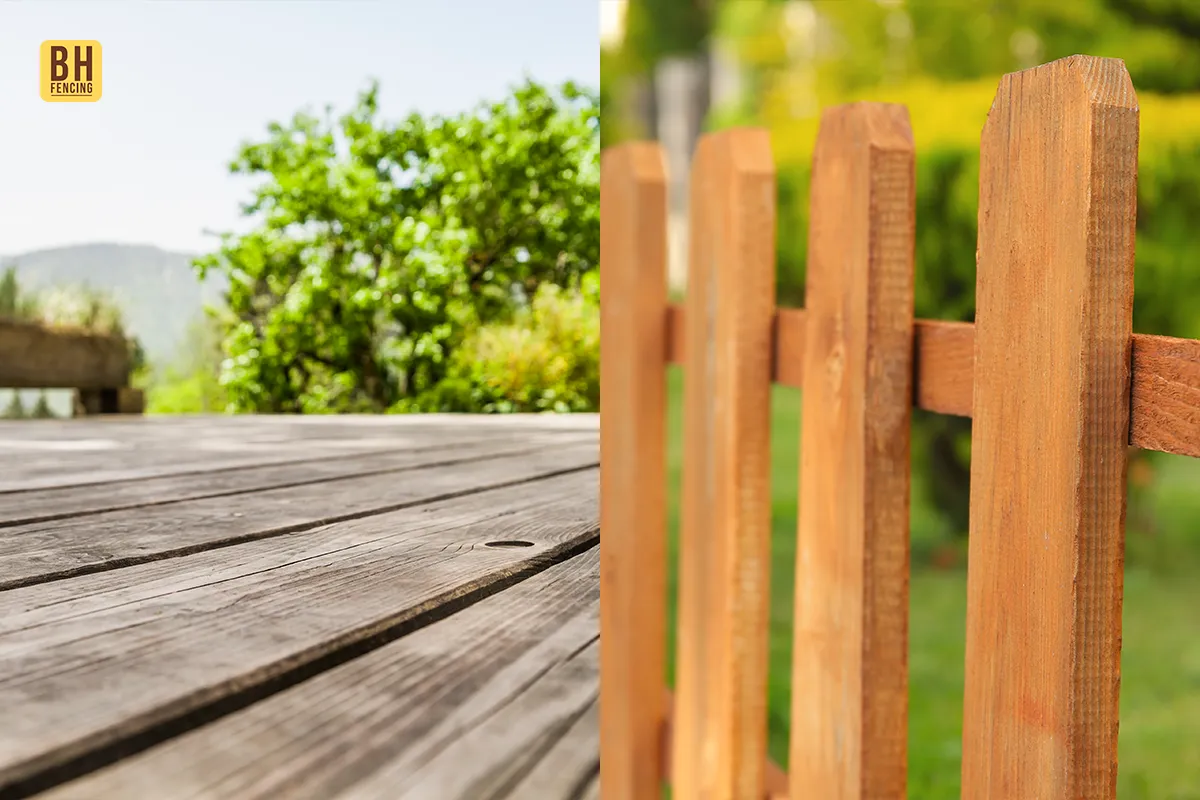
Fence, Deck, or Both? How Homeowners Maximize Spring Installations Without Rework
As winter loosens its grip across southwestern Ontario, homeowners begin to turn their attention outdoors. Spring brings longer days, softer ground, and a strong urge to finally tackle projects that were postponed during colder months. Fences and decks often top that list, not just for aesthetics, but for privacy, safety, and usability.
What many homeowners don’t realize is that spring is also the season when poor planning becomes most expensive. The same freeze–thaw cycles that loosen soil can expose structural weaknesses, misaligned posts, and layout conflicts that were previously invisible. This is especially true in counties like Norfolk, Brant, Oxford, and Haldimand, where soil composition and moisture levels vary dramatically from one property to the next.
At BH Fencing, we consistently see better long-term results when fencing, decking, and post installation are approached as a single coordinated plan rather than separate projects. When homeowners think ahead, they avoid rework, control costs, and end up with outdoor spaces that function properly for years.
Why Spring Installations Require More Than Good Weather
Spring is widely viewed as the “ideal” time to build, but that assumption can be misleading. While temperatures may be mild, the ground beneath the surface is often still unstable. In many parts of Southwestern Ontario, frost can linger below grade well into early spring, especially in shaded areas or low-lying sections of a property.
Clay-heavy soil, common throughout Oxford and Haldimand Counties, retains moisture longer than sandy soil. When this moisture freezes and thaws, it expands and contracts, placing upward pressure on posts that aren’t installed deep enough. This is why fences that look perfectly straight in April can start leaning by the following winter.
Deck footings are affected in similar ways. If footings are poured or set without accounting for frost depth and drainage, decks can settle unevenly or shift over time. These aren’t cosmetic issues; they affect safety, structural integrity, and long-term maintenance costs.
Spring installations succeed when soil conditions are evaluated properly, post depth is adjusted for local frost patterns, and project timing is aligned with ground readiness, not just calendar dates.
Fence First, Deck First, or Both Together?
One of the most common questions homeowners ask is which project should come first. The answer depends less on preference and more on how the space will actually be used.
Installing a fence first can make sense when privacy, security, or property boundaries are the top priority. This is often the case for rural properties, corner lots, or homes backing onto open land. However, when fencing is installed without considering future deck placement, problems can arise. Fence posts may interfere with stair access, railings, or walkways, forcing changes later.
Deck-first projects are common for walk-out basements, sloped yards, or homes where elevation dictates layout. But decks built in isolation can limit fence alignment, gate placement, or even access for maintenance.
In many cases, the most efficient and cost-effective approach is to plan both projects together. Coordinated layouts allow post holes to be shared where appropriate, ensure clearances are maintained, and prevent structural conflicts. Even if construction happens in phases, having a unified plan reduces mistakes and avoids tearing out work later.
Soil Conditions, Frost Depth, and Structural Stability
Below-ground planning is the most overlooked and most critical part of any fence or deck installation. Soil composition varies significantly across Southwestern Ontario, sometimes changing within the same property. Areas near rivers or low-lying land often have higher moisture content, while elevated areas may drain quickly but still experience frost penetration.
Repeated freeze–thaw cycles are a defining feature of the region’s climate. According to Environment Canada data, these cycles can occur dozens of times per winter, placing ongoing stress on posts and footings that aren’t designed for movement.
Fence posts that are too shallow or improperly set are especially vulnerable. Over time, even minor seasonal movement can cause panels to twist, gates to drag, and fasteners to loosen. Deck footings face similar risks, particularly when drainage isn’t managed correctly.
Professional post hole installation addresses these risks by adjusting depth, spacing, and reinforcement based on soil conditions, not generic standards. When fencing and decking are planned together, post installation can be optimized across the entire project, improving stability and lifespan.
A Real Spring Planning Scenario We See Often
We recently worked with homeowners who installed a fence early in the spring. Later that season, they decided to add a deck. Stair placement conflicted with existing fence posts, and gate access was restricted. Several posts had to be removed and reset, increasing both labor costs and disruption to the yard.
In contrast, projects that begin with a comprehensive plan rarely face these issues. When fencing, decking, and post layout are considered together, access points are preserved, spacing is intentional, and the finished space works as a whole, not as a series of add-ons.
Cost, Value, and Long-Term Performance
It’s natural to focus on upfront cost when planning outdoor projects, but the true cost of a fence or deck is revealed over time. Repairs, adjustments, and premature replacements quickly outweigh modest savings from rushed or incomplete planning.
Organizations like the Canada Mortgage and Housing Corporation (CMHC) recommend evaluating exterior structures based on lifecycle cost. This includes maintenance, durability, and exposure to environmental stress—not just installation price.
Fences that require frequent post resets or decks that need leveling after a few seasons often end up costing more than properly installed alternatives. Planning fencing, decking, and post installation together reduces redundancy, minimizes excavation, and improves overall performance.
Why Local Experience Matters More Than Materials Alone
Materials matter, but how they’re installed matters more—especially in regions with challenging soil and climate conditions. Generic installation guidelines don’t account for local variations in frost depth, drainage, or property layout.
BH Fencing is a locally operated, fully insured contractor serving Norfolk, Brant, Oxford, and Haldimand Counties. Our installation methods are shaped by years of working in these exact conditions. We don’t rely on one-size-fits-all approaches because they don’t work here.
Local experience allows us to anticipate issues before they appear and design installations that stay straight, level, and functional over time.
Plan Once. Build Once.
Spring is an excellent time to build—but only when planning happens first. Whether you’re installing a fence, a deck, or both, success depends on what happens below ground and how each element fits into the larger layout.
In summary, focus on planning before starting spring projects. Coordinating fencing, decking, and posts from the start minimizes problems, controls your budget, and helps structures last longer. The main takeaway: plan all elements together to prevent avoidable issues and costly rework.
The key is to begin your spring project with expert advice that fits your property, goals, and regional conditions, ensuring results that work and last.
